A nutrition-focused grocery companion designed to help users make healthier, safer, and more informed food choices.
Summary
NutriScan is a health-focused grocery app that helps users make informed food decisions through product scanning, personalized dietary filters, and healthier alternatives. The app combines nutrition transparency with smart grocery planning to reduce stress and support healthier choices.
Project Overview
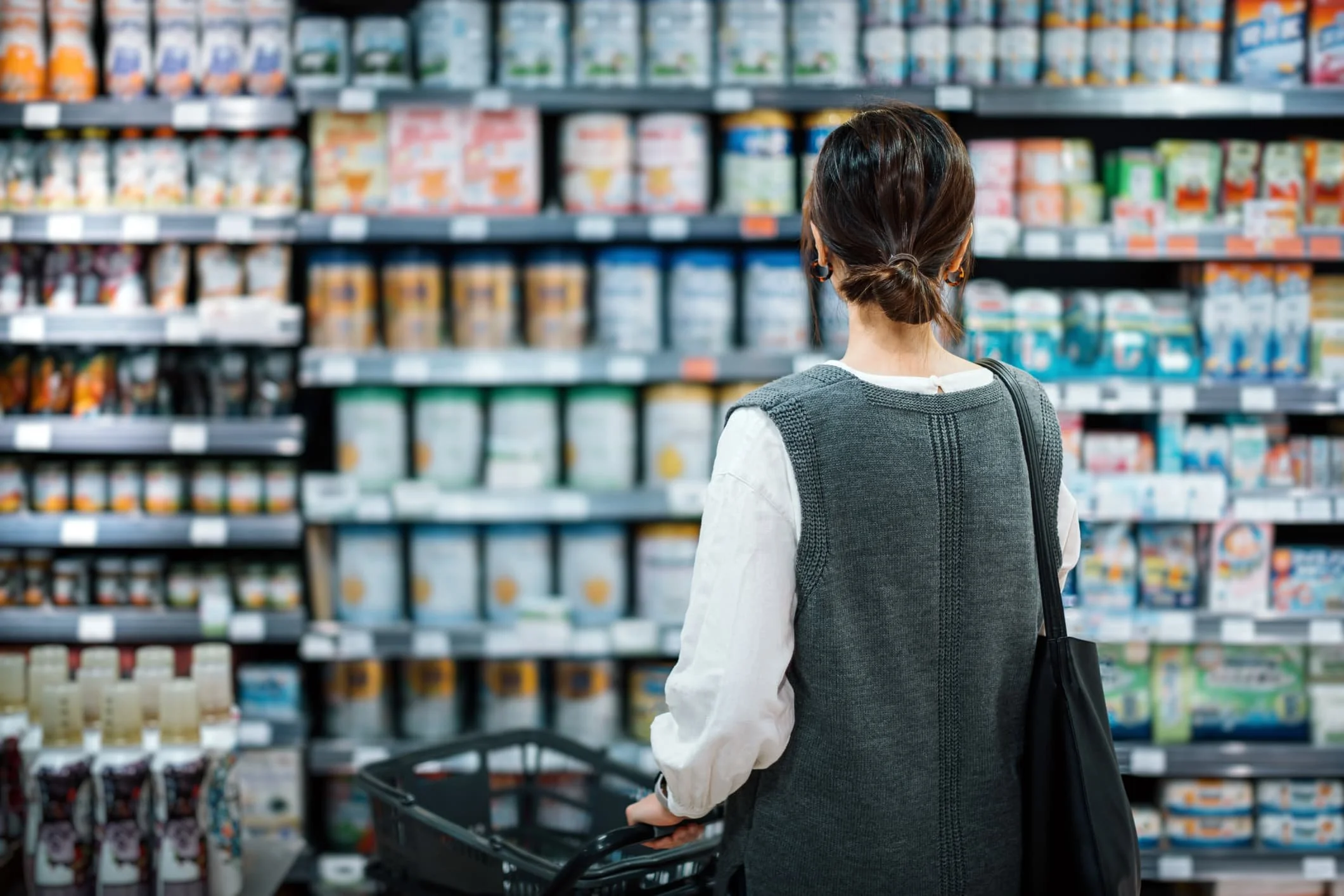
Grocery shopping can be overwhelming for users with dietary restrictions, health goals, or limited time. Many existing nutrition apps provide information, but often lack clarity, personalization, and practical in-store support.
Problem
NutriScan was designed as a smart grocery companion that allows users to scan products, review nutrition facts, identify harmful ingredients, and receive healthier alternatives while also supporting list-building and family sharing features.
Proposed Solution
Discover
Secondary Research
Competitive Analysis
User Interviews
Define
Personas
Journey Maps
Ideate
Design Direction
Features Needed
Prototype (LO-FI)
Sketches to Wireframes
Prototype (HI-FI)
Final Prototype
Secondary research revealed major health concerns surrounding food allergies, additives, and ultra-processed ingredients. These findings highlighted the need for better food transparency and more accessible nutritional information while shopping.
Discover
Secondary Research
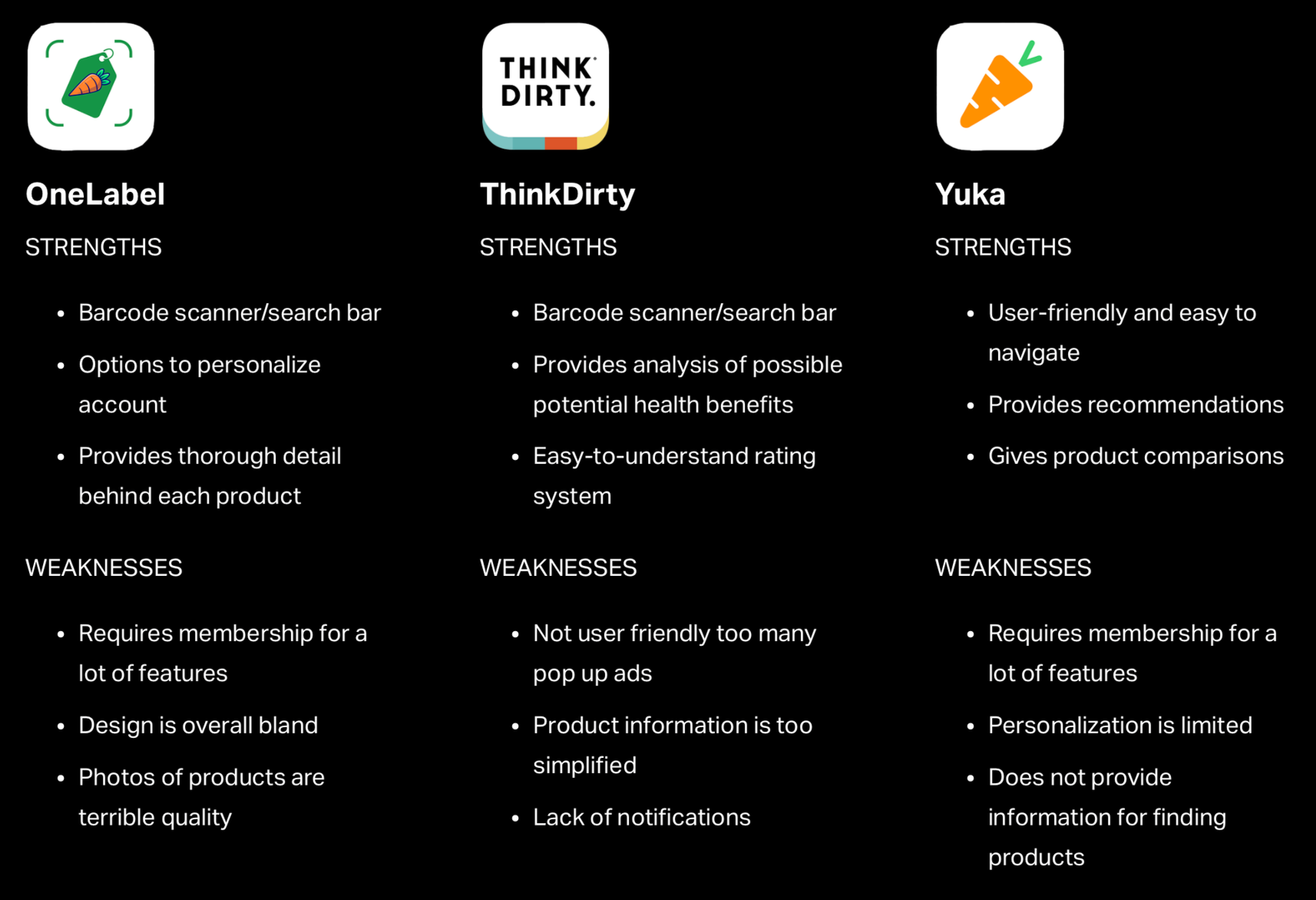
While many competing apps provide nutritional information, they often lack user-friendly explanations and meaningful notification systems that support long-term accountability. By evaluating their strengths and identifying key gaps, this analysis helped define how NutriScan could differentiate itself through clearer insights, simplified guidance, and stronger user support features.
Competitive Analysis
User interviews revealed that many people feel overwhelmed when trying to make healthy food choices, especially while shopping under time constraints. Common pain points included difficulty understanding nutrition labels, uncertainty around ingredients, and frustration with finding options that align with dietary goals or restrictions. These insights helped shape NutriScan’s focus on clear explanations, personalized filters, and healthier product recommendations.
User Interviews
Define
To ensure our Food Scanner caters to diverse needs, we crafted four distinct personas embodying varied perspectives on the app.
Personas
A single mother balancing dietary restrictions for her two sons.
Mia Brown
Daniel Clark
A financially constrained college student navigating budget constraints.
John Smith
A retiree urged by doctors to adopt a healthier lifestyle.
A young personal trainer managing celiac disease.
Zoey Carter
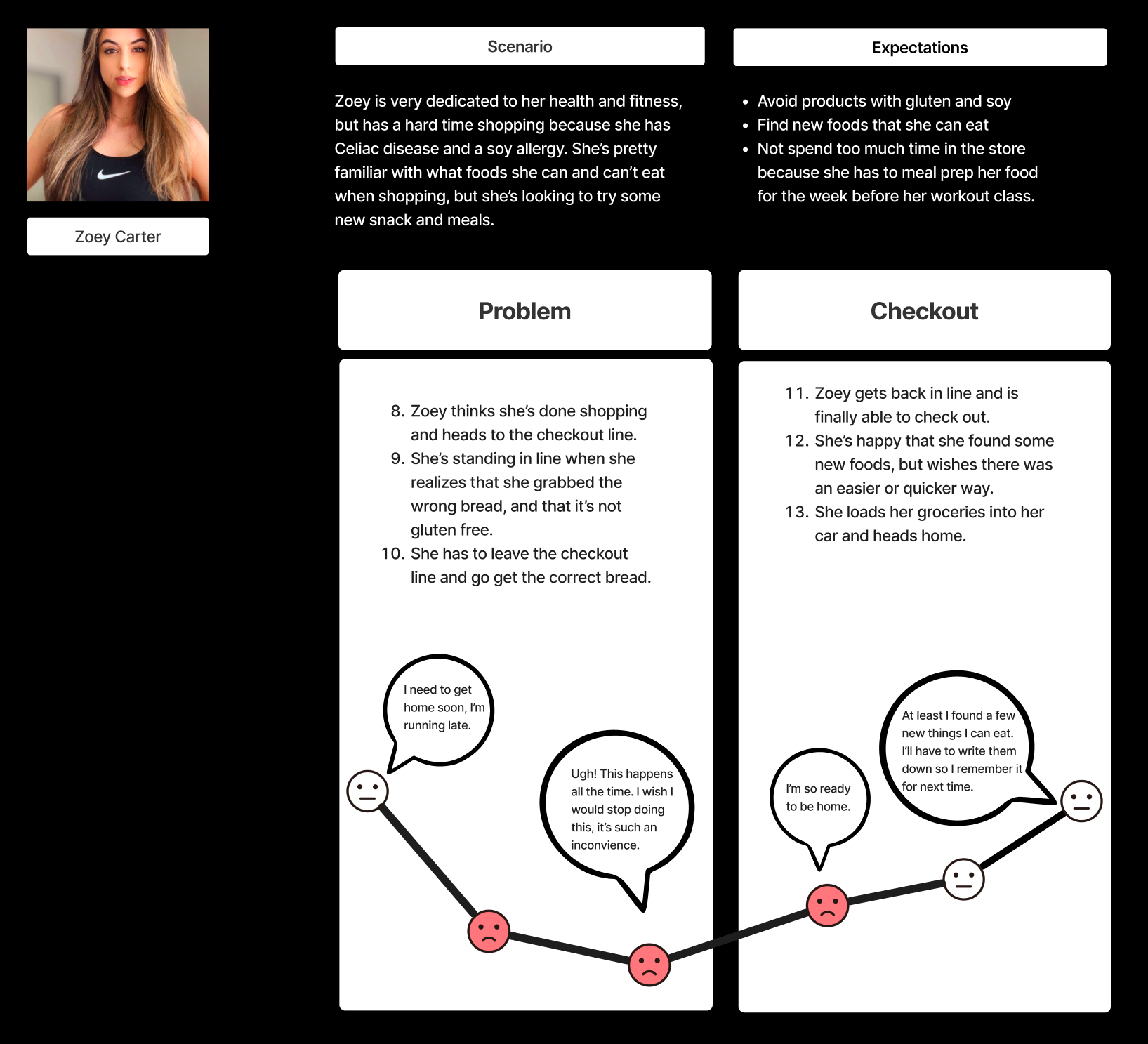
User interviews and journey mapping revealed that grocery shopping can be especially stressful for individuals with dietary restrictions, such as celiac disease. Users expressed frustration with trying to quickly identify safe products, uncertainty around ingredients, and the fear of accidentally selecting the wrong item. Across all journey maps, recurring themes included confusion about what each product contains, stress over whether items meet dietary needs, and concern about forgetting essential items while shopping.
Journey Maps
Ideate
Design Direction
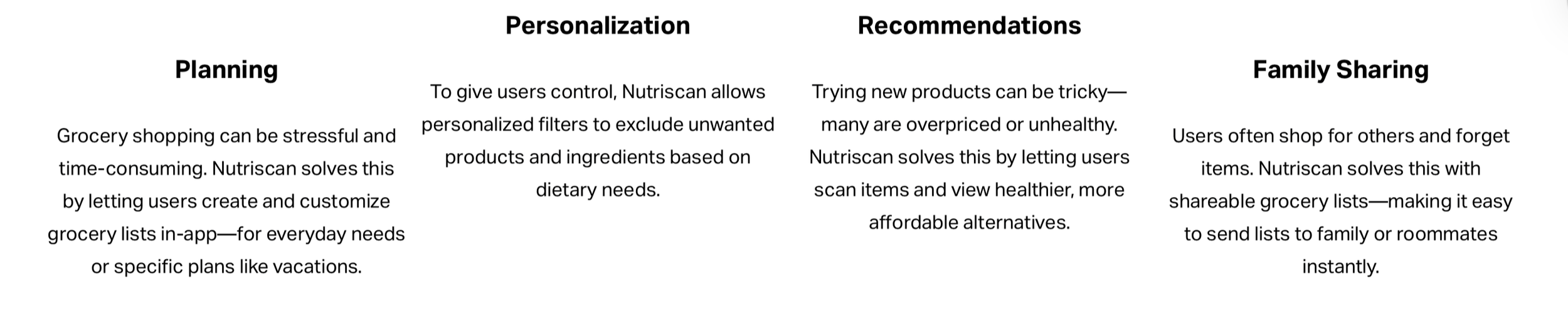
Based on the research and user pain points, the ideation phase focused on simplifying grocery decision-making through intuitive product scanning, personalized dietary filters, and real-time recommendations. The goal was to reduce confusion, minimize stress, and help users shop with greater confidence and efficiency.
Features Needed
LO-FI Prototype
Sketches to Wireframes
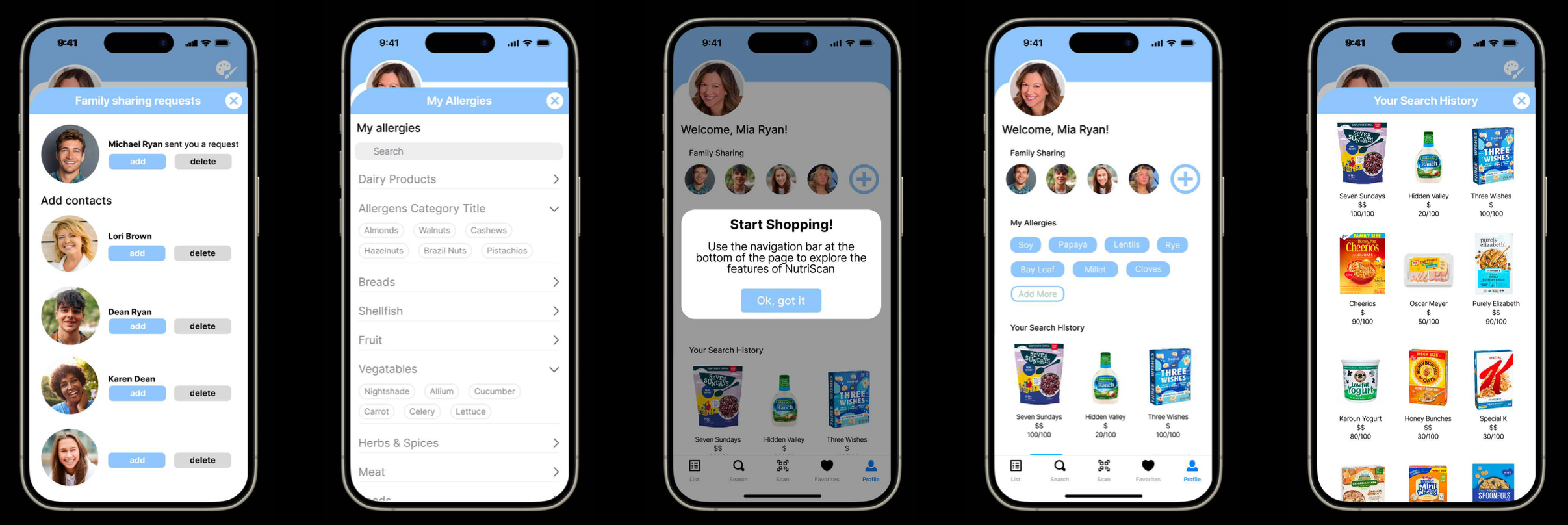
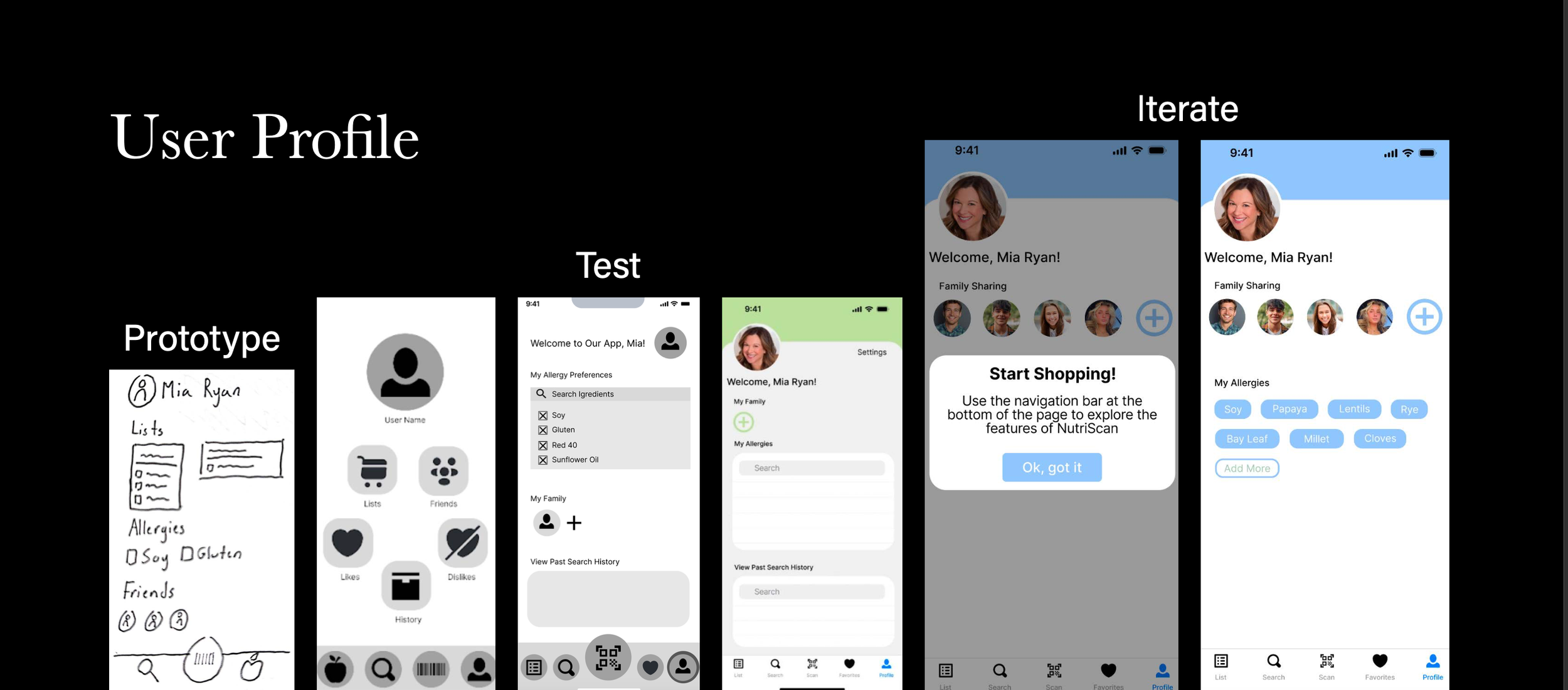
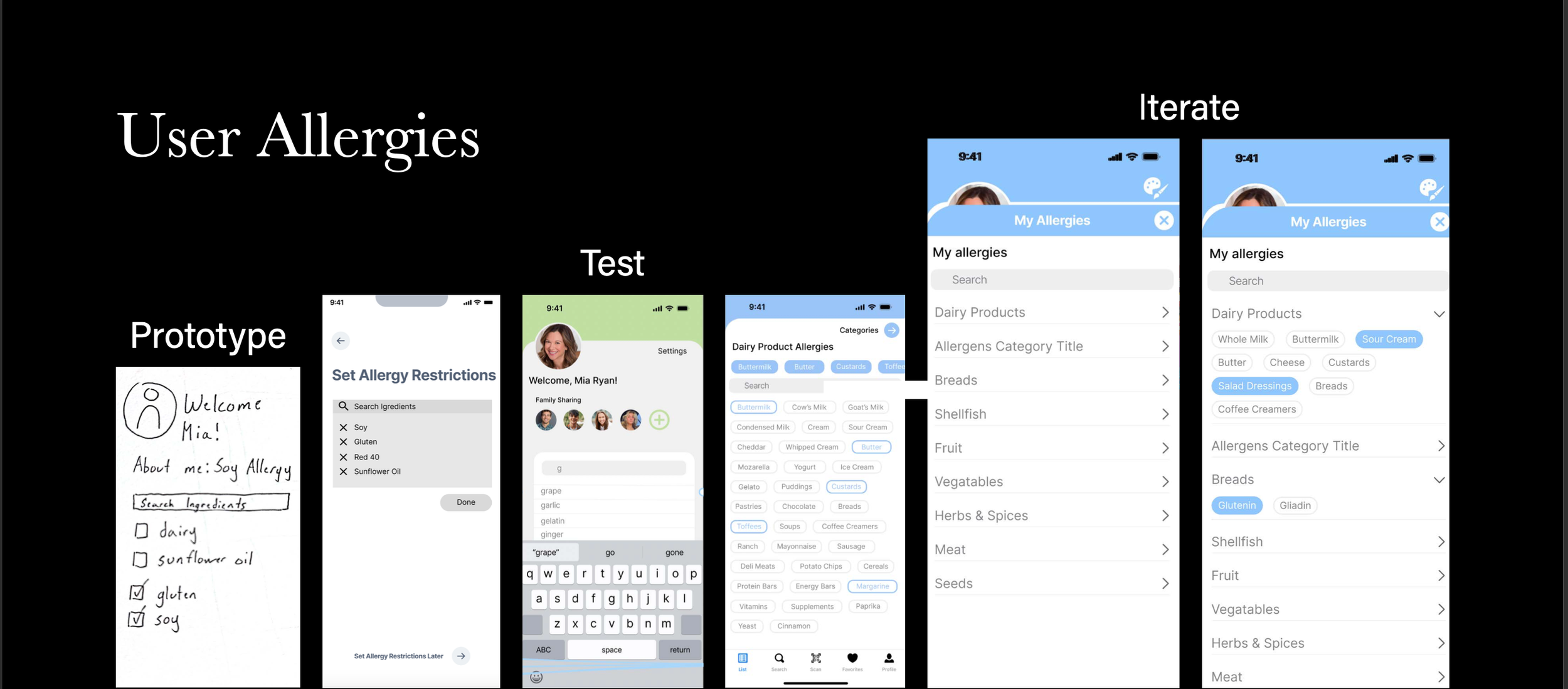
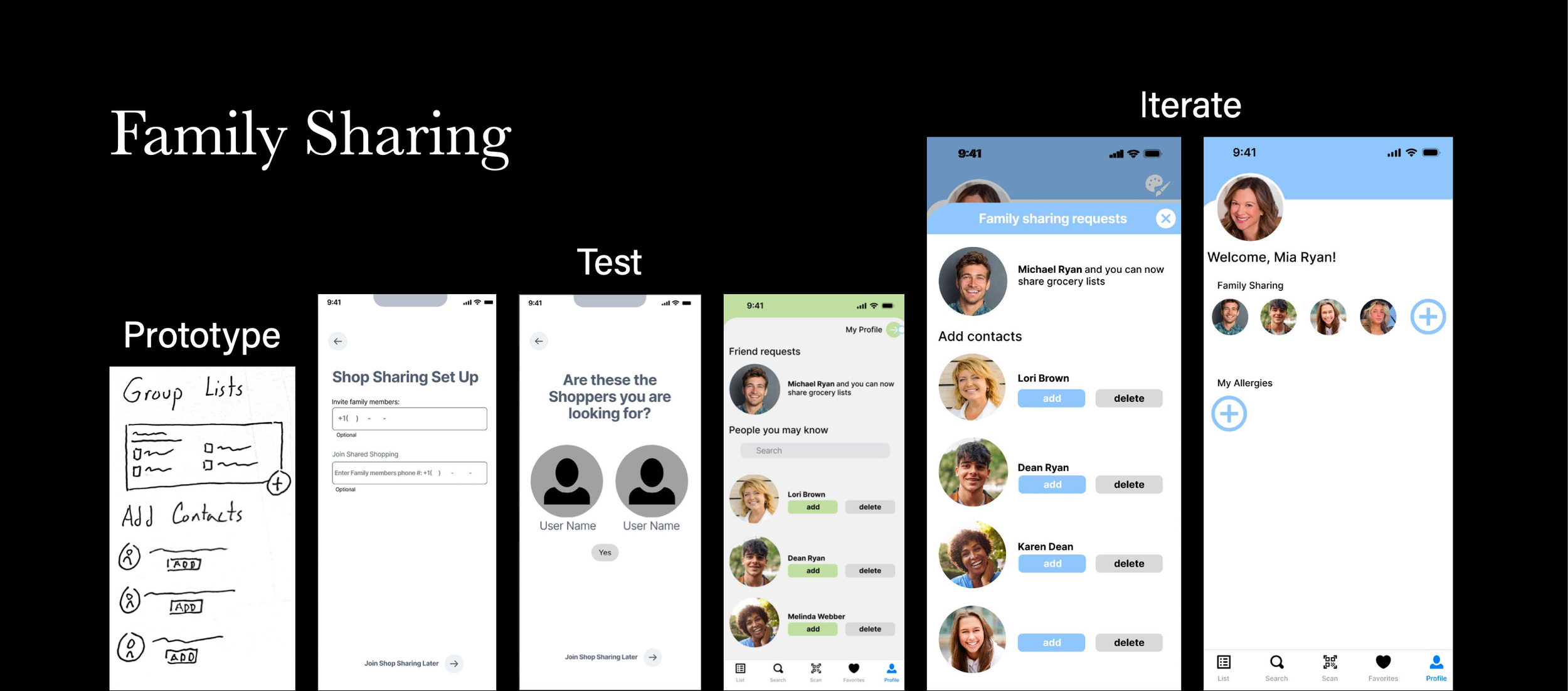
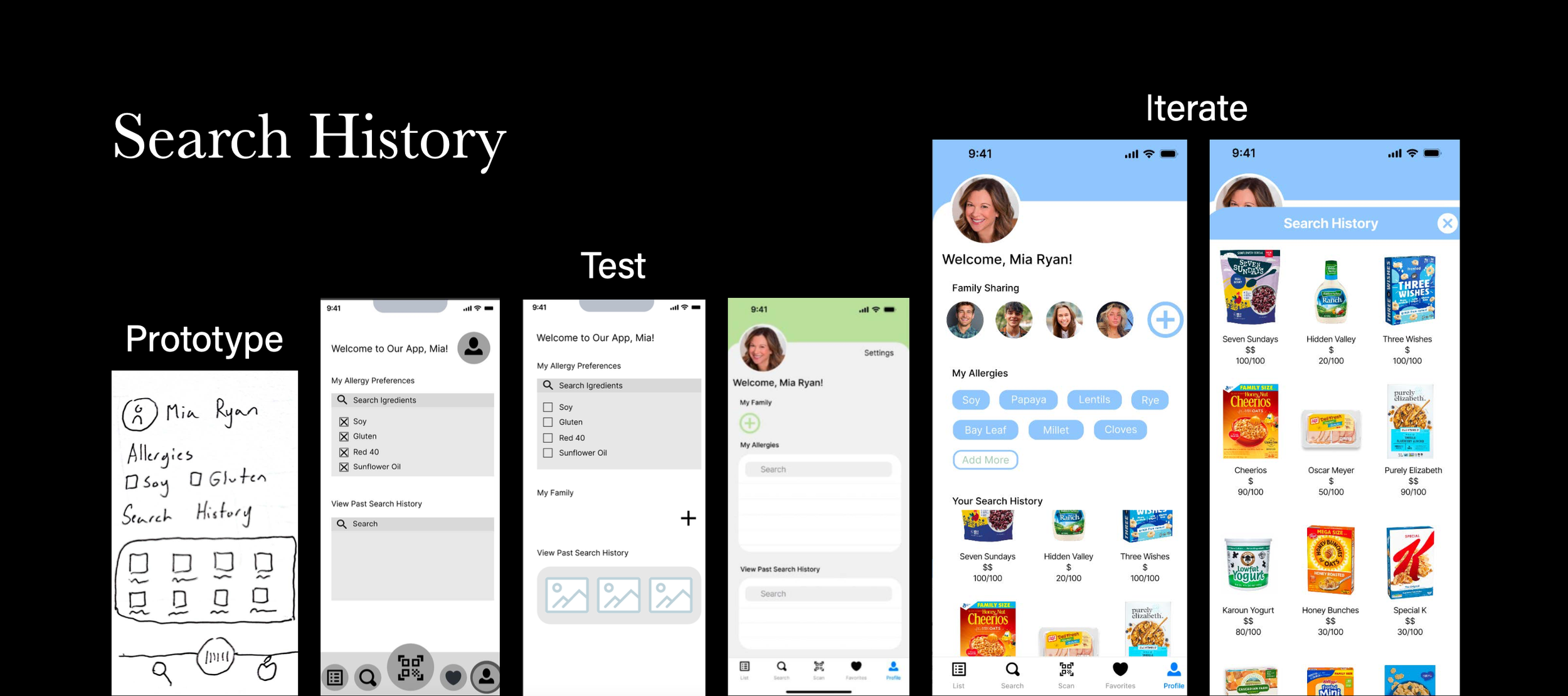
Low-fidelity prototypes were created to explore key features including allergy management, search history, family sharing, and user profile functionality. These screens were iteratively refined through testing and feedback to improve usability, reduce confusion, and better support users with dietary restrictions.
HI-FI Prototype
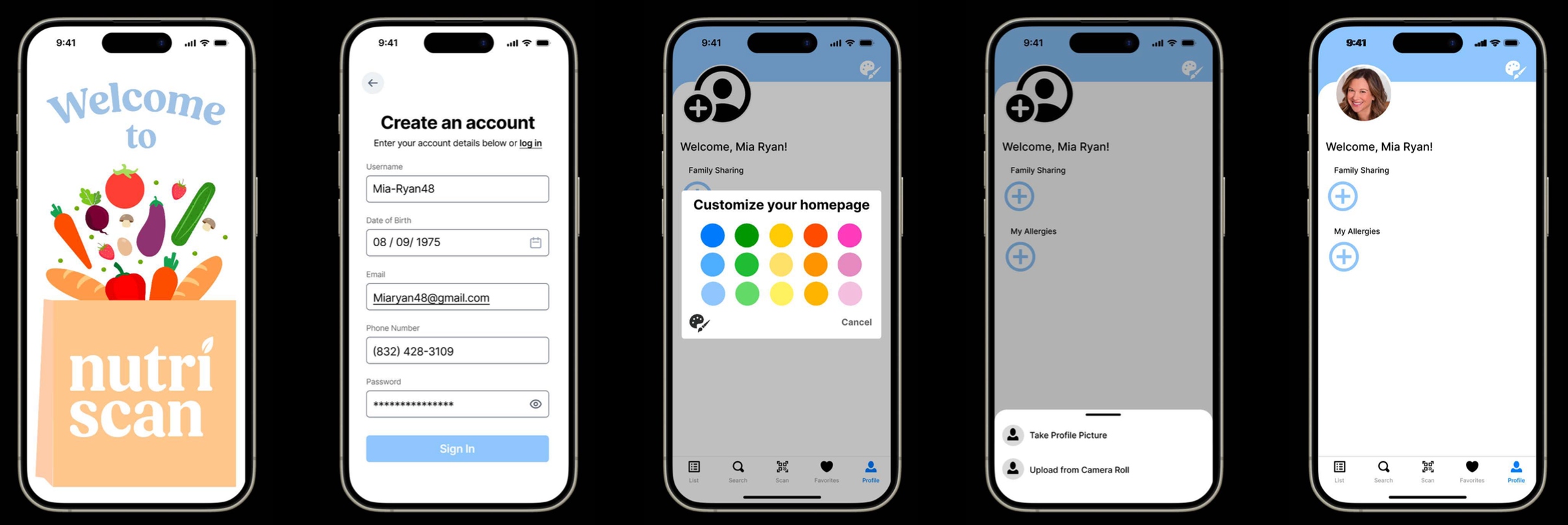
I led the design and refinement of NutriScan’s personalization features, including allergy management, family sharing, user profiles, and search history, creating an experience tailored to each user’s dietary needs.
Final Prototype